Club history · 1972–1982
The monastery ground
A new name, a home granted by the Passionists, three cup finals in three years, a Junior Shield, and the two titles that carried the club to the top flight.
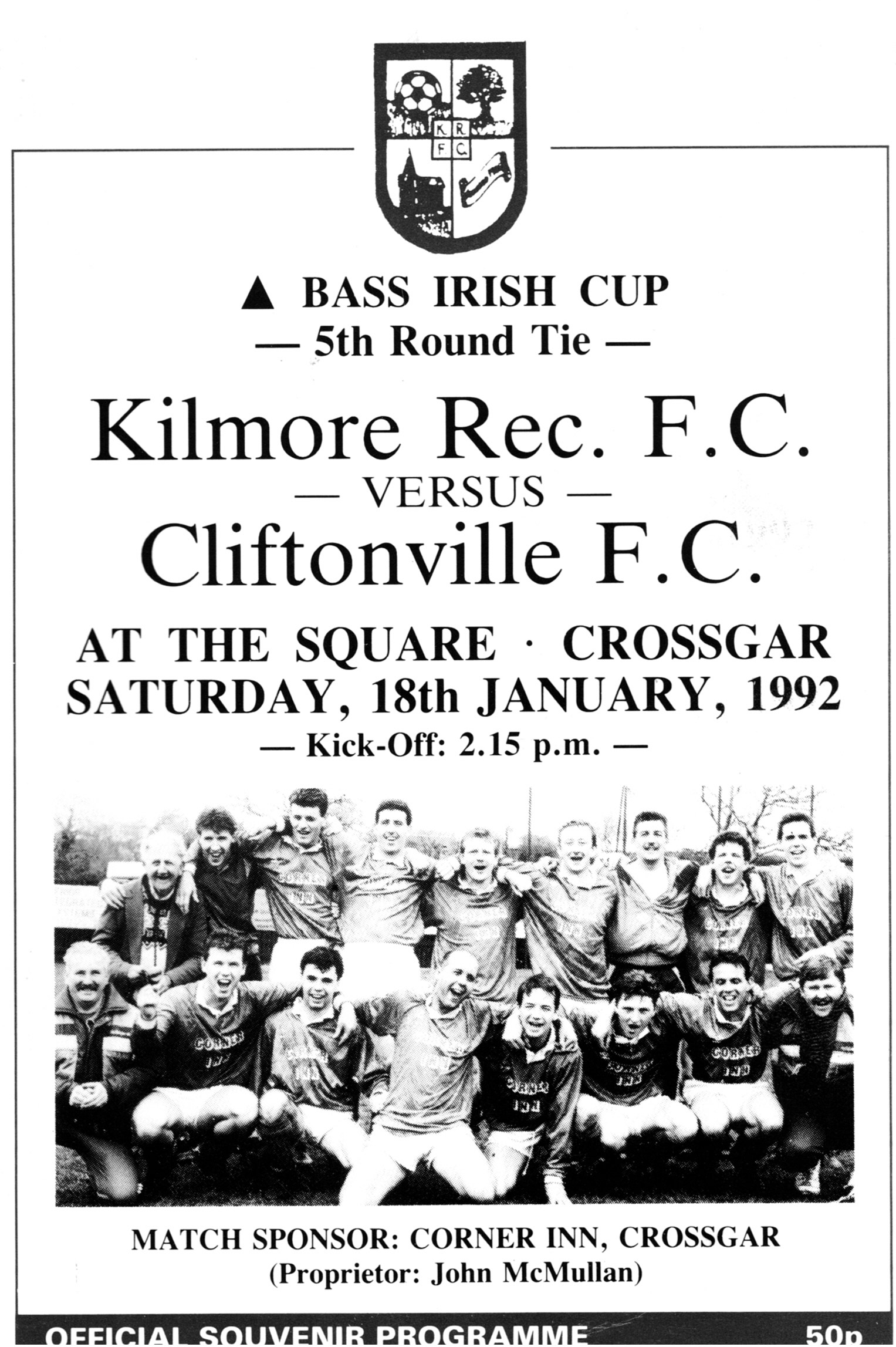
In 1972 the club made the three decisions that shaped everything since. It became Kilmore Recreation. It moved to the monastery ground at Crossgar, on land granted by the Passionist community of Tobar Mhuire, whose generosity gave the club the home it still plays on. And it was accepted into the Northern Ireland Amateur Football League, opening with a home match against Carreras in Division 2B. For years the ground was known simply as “The Square”, the name the 1992 Irish Cup programme still gives it, and the first changing rooms were the upstairs rooms of a house on The Square itself.
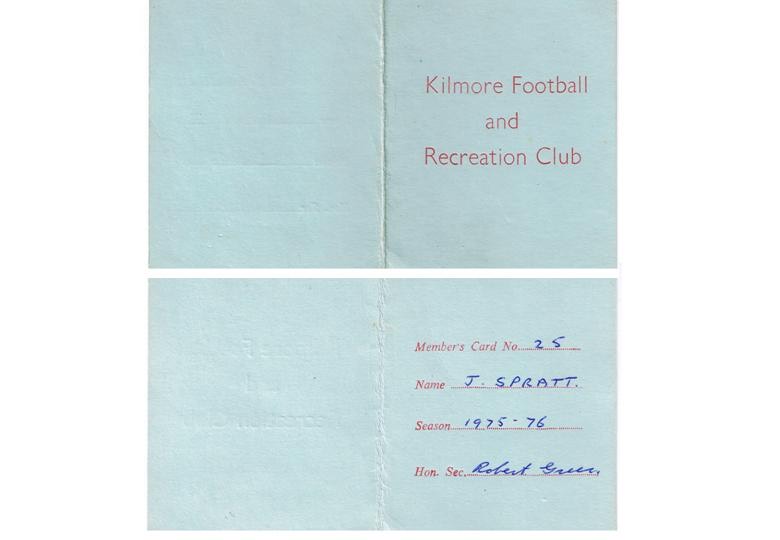
The club ran deep from early on. A second eleven was competing in Division 3B by the autumn of 1975, and the youth section had been entering national competitions since 1974, playing in yellow.
The double season, 1978–79
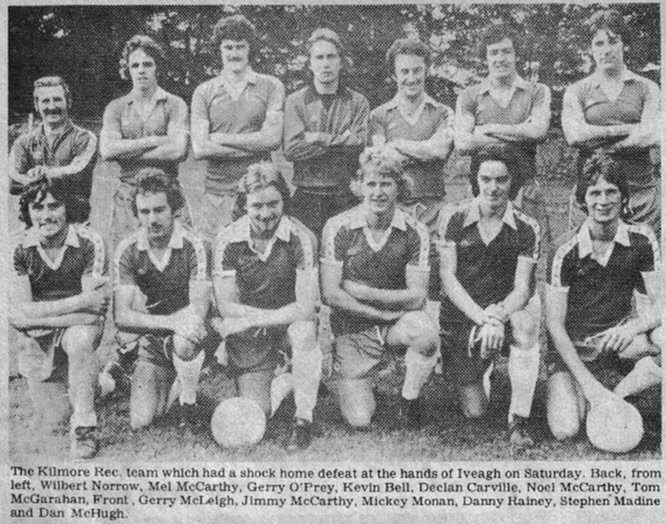
Promotion to 2A followed within two years, and the late seventies became the club’s first golden spell. 1978–79 was the peak of it, a season spent chasing two trophies at once, and it came within a whisker of being remembered as something far bigger.
In the spring of 1979 Kilmore Rec reached the semi-final of the Irish Junior Cup, the all-Ireland junior competition. Warrenpoint, 111th Old Boys and the North Belfast side 40th Old Boys were all put out along the way — the last of those a name worth keeping for later. The Belfast Telegraph, taking stock at the quarter-final stage, called Kilmore “Crossgar aces”. The run ended 2–0 to Annalong Swifts before a sizeable crowd at Crothers Memorial Park, Banbridge, with two missed penalties to regret. Nobody wrote it down afterwards, and the achievement sat forgotten for forty-seven years until this project found it back in the newspapers.
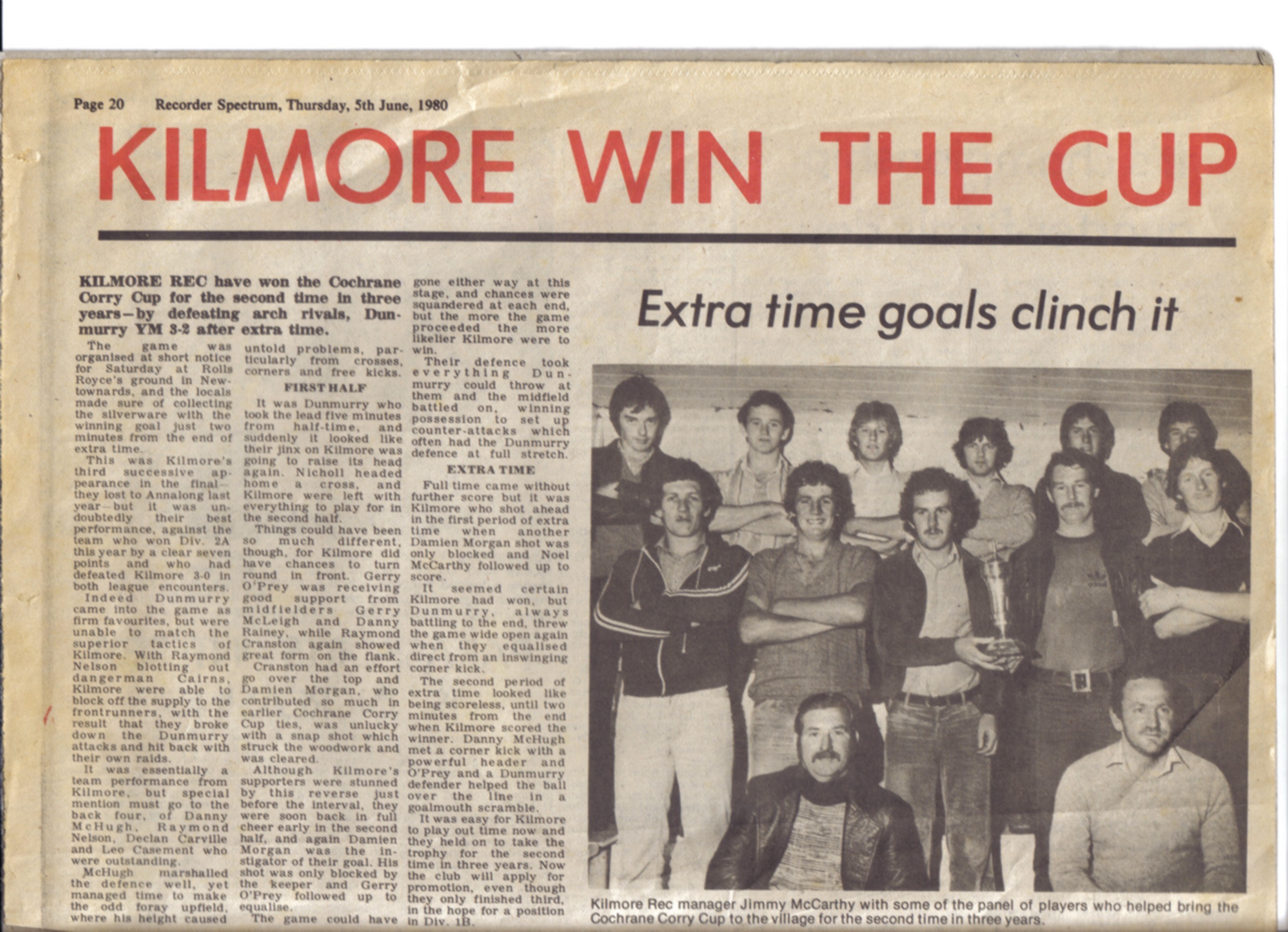
Penalties owed Kilmore that spring, and penalties had already paid up once. In the Cochrane & Corry quarter-final at Ballynahinch a fortnight earlier, a man was sent off on each side, Conleth McCarthy equalised in the 82nd minute, and when the referee sent the tie straight to a shoot-out with no extra time, Noel McCarthy, Gerry O’Prey and Ernie Casement all converted to put Kilmore through. They reached three consecutive Cochrane & Corry Cup finals from 1977–78 to 1979–80 — the Amateur League ran a cup for each tier, and the Cochrane & Corry was the Second Division’s. The first was won 1–0 against Queen’s University II, the first trophy ever engraved Kilmore Rec FC; the second was lost 3–2 to Annalong Swifts; the third was won 3–2 against arch rivals Dunmurry YM after extra time at the Rolls Royce ground in Newtownards, Danny McHugh heading the winner from a corner two minutes from the end. “KILMORE WIN THE CUP” ran the Recorder’s headline, over a photograph of manager Jimmy McCarthy with the trophy.
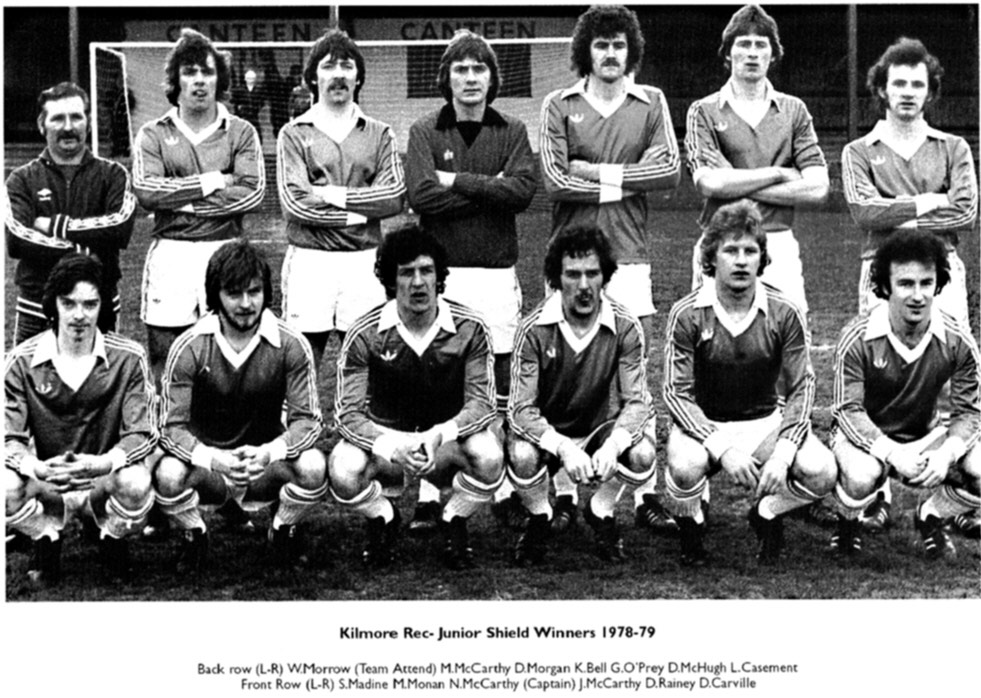
In the middle of that run came the Co. Antrim FA Junior Shield, and it was won the hard way. Glebe Swifts were put out in the round before the semi-final. The semi-final against 1st Bangor OB was abandoned at 2–2 at Comber when the light went; Kilmore won the rerun 3–0 at Drome Park, Newtownards. That set up a first Shield final, on the evening of Monday 30 April 1979 at Castlereagh Park, Newtownards — against 40th Old Boys, favourites, winners of the trophy twice in the previous three years, and the same side Kilmore had knocked out of the Junior Cup eight weeks earlier. 40th led through Jim Whitley on 55 minutes. Mel McCarthy levelled it on 79. In the closing minutes Damien Morgan, who had missed a good chance earlier, stabbed home the winner. Both goals were made by Gerry O’Prey, who took the second half apart. Kilmore Rec 2, 40th Old Boys 1, captain Noel McCarthy collecting the Shield, and the Belfast Telegraph reporting “joy in Crossgar and gloom in North Belfast”. It was proof the club could win on the bigger stage, and the springboard to intermediate status.
The McCarthys
The side that did all this was drawn from a handful of Crossgar families, and one of them supplied four of the eleven: Noel junior, Jimmy, Conleth and Mel McCarthy were brothers, and by the spring of 1979 Noel junior and Jimmy were running the team as well as playing in it. They had taken over mid-season from Damien Morgan, who handed the job on and stayed as a player — and then scored the winning goal in the Shield final six weeks later.
They did it with the fixture list falling apart around them. By the middle of March, between the two cup runs and the weather, Kilmore had played seven league matches all season and were still chasing everything.
The treble that wasn’t, and the two titles that were
1980–81 was the season Kilmore were tipped for a treble, and it came down to eleven days in May. On Tuesday 12 May they went to Skegoneil Avenue for the Clarence Cup final against Ballyclare Comrades Reserves, having put POSC out 4–1 in the semi-final. The Belfast Telegraph made Kilmore favourites — they were top of Division 2A at the time — but Ballyclare won it, and took the trophy to the town for the first time. A fortnight later came the Cochrane & Corry semi-final: an injury-hit Kilmore drew 2–2 after extra time with Rooftop and went out 5–4 on penalties. Two legs of the treble gone inside a fortnight.
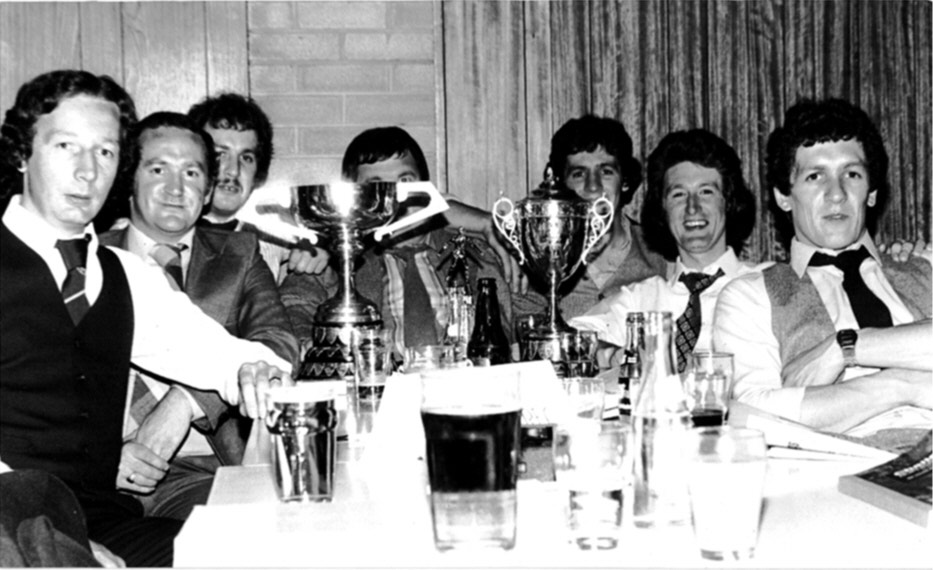
The third leg they won. The Division 2A championship was decided that same week in 1980–81 — the club’s first league title — and it was collected in some style. The Amateur League had let its presentation dinner lapse for years, and chose that summer to revive it: a dinner dance at the Windsor Park Social Club on Friday 12 June 1981, representatives of all ninety-two member clubs in the room, and a guest brought over to hand the trophies out. The league’s shortlist ran to Lawrie McMenemy, Jack Charlton, Gordon Banks and Malcolm Allison. The man who came was Danny Blanchflower, who had captained Spurs to the Double in 1961 and managed Northern Ireland. Kilmore Rec’s first championship was handed over by him.
The step up to 1B was then taken with such ease that the 1B title came at the first attempt in 1981–82. The champions strengthened smartly too, signing Dromore Amateurs’ captain of three years, Jim Gregg, in the summer of 1981. Ten years after joining the Amateur League in its second tier, Kilmore Rec were going into the top flight.
 Add to your home screen