Club history · 2002–2010
Cups, upsets and Christmas at Seaview
The great 2003–04 turnaround, Irish League scalps in the Antrim Shield, four lost Border Cup finals, and the morning that made up for all of them.
The new century opened with the old habit intact. Banbridge Town, beaten 4–1 at Crossgar in the 1987 Intermediate Cup, were dumped out again in November 2002, 2–1 at their own rain-swept Crystal Park, with Rathfriland Rangers seen off 3–1 in the previous year’s competition for good measure.
The Border Cup, though, was already becoming the club’s private torment. In November 2001 Kilmore won the semi-final, beating Dromara Village 1–0 at Seaview through a 25th-minute penalty. Dromara lodged a protest saying Kilmore had fielded an ineligible player, and the Amateur League agreed: Kilmore were thrown out of the competition they had just reached the final of, and Larne Tech Old Boys were handed the trophy. The final was never played at all.
What lay behind it was a piece of paperwork. One of the Kilmore defenders had been sent off earlier that season while playing for another club, and had not been wearing the shirt number listed on the match card, so the referee reported the wrong name to the IFA and the suspension never attached to him. He played on in good faith, and by the time the mistake surfaced Kilmore were in a final they were no longer allowed to contest. A year later the Belfast Telegraph was still describing the club as having been “denied a place in the final of last year’s Border Cup”. The player stayed, and was still in the side for the club’s next two Border Cup finals.
There was a bitter symmetry to it. Eighteen years earlier, in 1983, Kilmore had lost a Border Cup semi-final on penalties to a Dunmurry YM side propped up by a player who turned out to be a professional and ineligible. Dunmurry were expelled and the final scrapped, but Kilmore were never reinstated and the cup went to the holders. The club had been on the wrong end of that rule once already, from the other direction.
The chance to make amends came immediately, and went the same way. On 27 December 2002, at Wilgar Park, Kilmore lost the Border Cup final 2–0 to Killyleagh, who took the Steel Cup and the Border Cup in one season, the first club to manage it since Chimney Corner in 1973–74. Kilmore has now contested four Border Cup finals and won none. But what followed put the disappointment in its place.
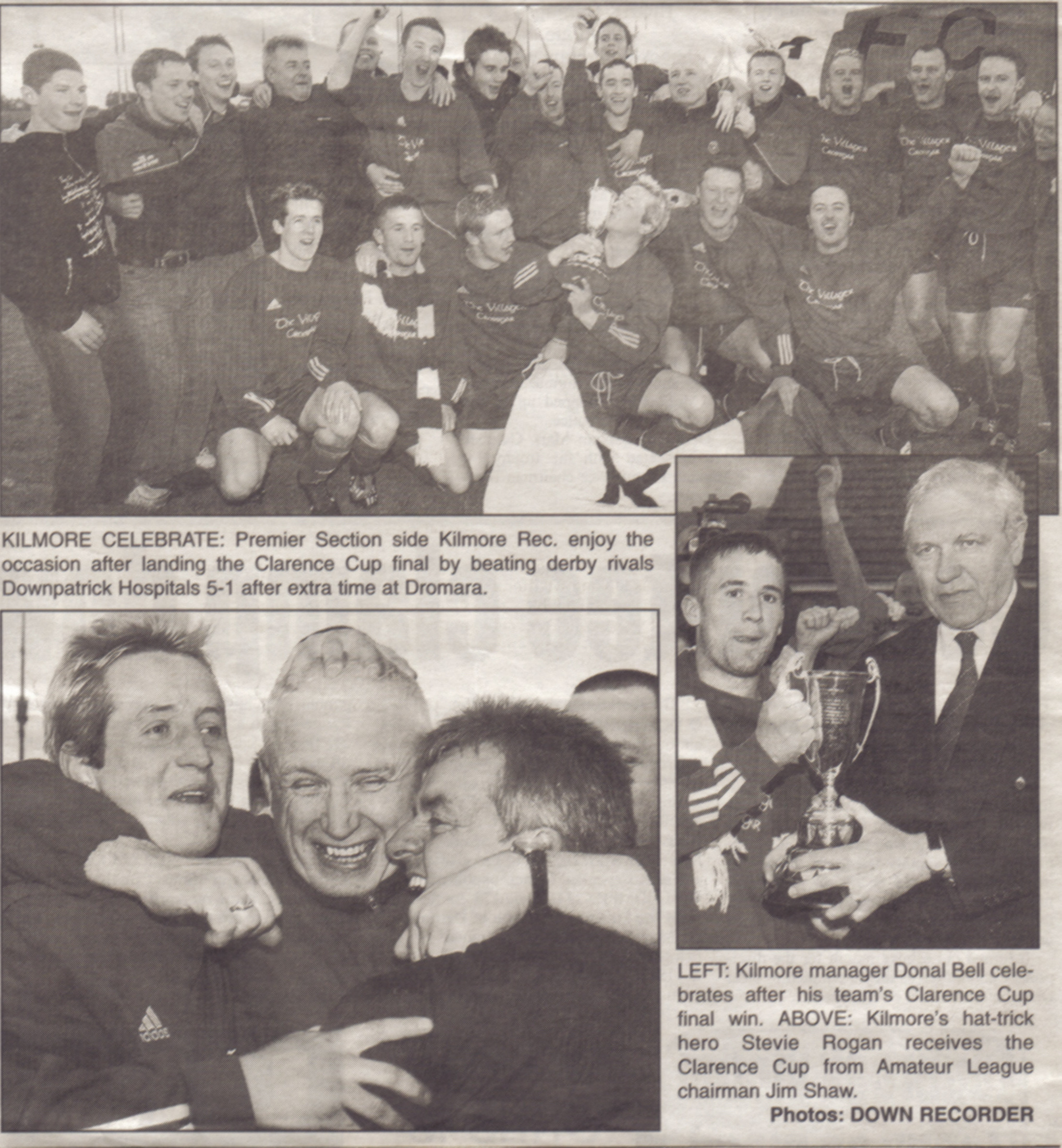
2003–04 produced the great turnaround season. Fewer than ten league points at Christmas, then a winning spree through the spring that swept up the Clarence Cup, with derby rivals Downpatrick Hospitals beaten 5–1 after extra time in a dramatic final at Dromara on 20 May 2004. A Stevie Rogan hat-trick was at its heart, and the cup was handed over by Amateur League chairman Jim Shaw.
It was retained a year later, to the goal. On the evening of Wednesday 18 May 2005, at Killyleagh Showgrounds and in atrocious weather, Kilmore beat Knockbreda Parish 5–1 — the identical scoreline, and a second successive final hat-trick for Stevie Rogan. Peter McKenna settled the nerves in the 11th minute; Rogan scored twice in six minutes around the half-hour with the wind behind him, and finished the job with an individual goal on the hour. Andy Massey headed one back from a free-kick three minutes later, and that was as close as Knockbreda came. Afterwards the manager put the win where it belonged: “It was our 45th game and our 22nd cup match, and the performance is a tremendous tribute to the fitness, determination and quality of my players.” Back-to-back Clarence Cups under Donal “Duck” Bell, the former Downpatrick Steel & Sons winner who had taken charge in 2000 and built the most successful Kilmore side in a generation.
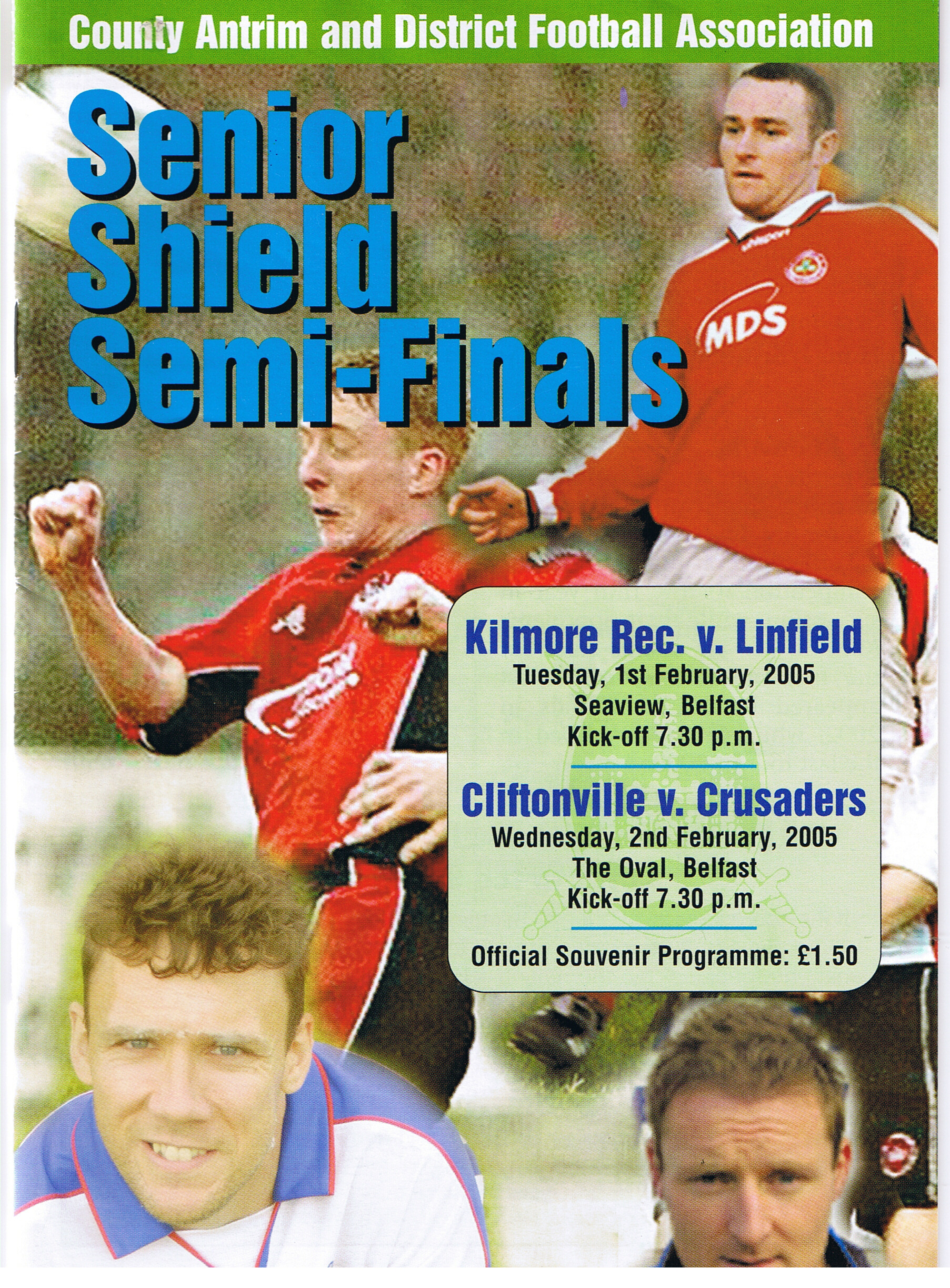
That side’s finest work came against full-time opposition. In the 2004–05 County Antrim Shield, Kilmore went to Ballymena United, days after Ballymena had beaten Linfield, and won 1–0 through an 88th-minute Alan Waterworth goal. In the quarter-final they held Lisburn Distillery 1–1 through extra time, John McCarthy equalising within two minutes of falling behind, and won the shoot-out 3–2, Paul Greener striking the decisive penalty in front of keeper Mickey Watson’s heroics. The semi-final brought Linfield to Seaview on 1 February 2005, and two Mark Picking goals ended the run 2–0. Not before a Kilmore side featuring a teenage Andy Waterworth, making his senior debut weeks before his move into the Irish League, had more than held its own for a half. The same season the club reached round six of the Irish Cup, where Ballymena took their revenge.
Not everything in those years bears repeating fondly. In December 2006, away to Newry City Reserves in the Intermediate Cup and 3–1 down, the referee abandoned the tie after what the Belfast Telegraph called an alleged free-for-all. Both clubs were fined £500 and thrown out of the competition. It says something about the season that the timing was reported as a piece of luck: the punishment did not bite until January, so nobody was missing for the Border Cup final six days before Christmas was out.
That final, at Wilgar Park on 27 December 2006, went the way the others had. Dunmurry Rec won 3–0, Gary Hewitt scoring the first and taking the man of the match award, and Kilmore were the fourth line of a story they were tired of telling. The club was being managed by Paul Moore — the same Paul Moore whose header had come off the Cliftonville crossbar at Crossgar fourteen years earlier, back at the club in the dugout — with Brian Healy as his assistant. Both had been Downpatrick players on the losing side of the 2004 Clarence Cup final, and were now in the opposite dugout. Moore, beforehand: “With only nine games played, it is not disastrous and with those games in hand, we have plenty of time to put things right.” Kilmore were two points off the bottom of the Premier at the time. They won 4–2 at Islandmagee three days after the final, and went out of the Clarence Cup to a Division 1B side in the first round a fortnight after that.
A nine-year Premier run ended with relegation in 2008 on 26 points, level with Nortel and undone by goal difference. The Border Cup then offered one more chance and took it away again: having knocked out Downpatrick on penalties, Kilmore went to Wilgar Park on 29 December 2008 as favourites, bidding, as the Belfast Telegraph put it, to “exorcise the ghosts of Christmas past”. Sport & Leisure won 3–1. The rebuild in 1A set the stage for the club’s finest season.
The road to the morning everything since has been measured against started in September, and it was not supposed to go anywhere. Kilmore were mid-table in Division 1A. In the last sixteen they drew Killyleagh, a Premier side, unbeaten, fresh from putting four past Bangor and installed as hot favourites — and beat them, ending Killyleagh’s season-long unbeaten run. Rathfern Rangers went out in the quarter-final.
Then the semi-final, and the night that made the whole thing possible. Ballyskeagh, Wednesday 18 November 2009, against H&W Welders of Championship 2 — both semi-finals had been moved off Seaview while Crusaders laid their new pitch. Philip Traynor had the ball in the net inside four minutes and was given offside. Nathan Curran kept Kilmore in it. On 67 minutes Glenn McMillan forced one over the line from under the bar and the Welders led. On 78 minutes Liam Graham came off the bench, and in the forty-odd minutes left to him he scored three times: a header from a Gary Kennedy corner on 82 to level it, a penalty in the fifth minute of extra time after McMillan bundled over Niall McCarthy, and — after the Welders had equalised again — the fourth kick of the shoot-out. Kilmore won 4–2 on penalties and were in a Steel & Sons final for the first time in the club’s history.
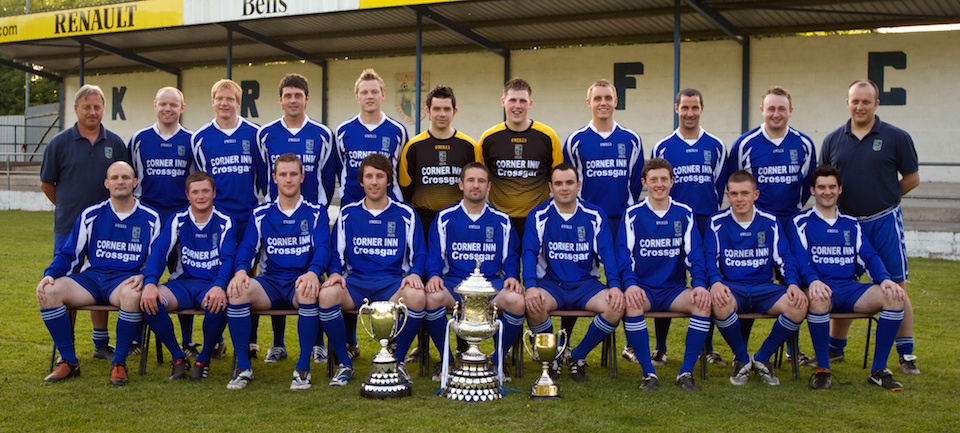
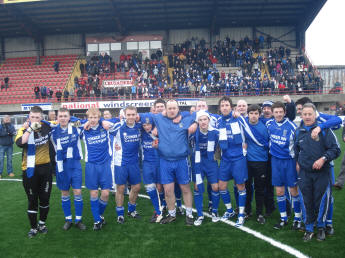
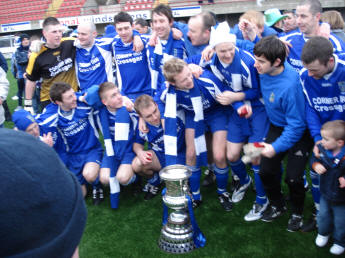
Christmas Day, 2009. Seaview. The Steel & Sons Cup final, one of the biggest prizes in intermediate football, contested since 1895, and that year the first final played on an artificial surface — and the first all Amateur League final in thirty years — against neighbours Downpatrick, six miles up the road and a division above. Twelve hundred people came out on Christmas morning to watch it.
Kilmore started the brighter. Phil Traynor shot over early after the Downpatrick keeper flapped at a cross; Kennedy headed a Steven Rogan cross that was scrambled off the line, and was then put clean through only for Barry Fitzsimmons to clear off the line and collide with the post doing it. Ten minutes before the break Karl Lewis found Niall McCarthy in the box and McCarthy glanced in a header the keeper never saw. The Downpatrick second half never came, and late on Liam Graham finished a solo run to make it 2–0.
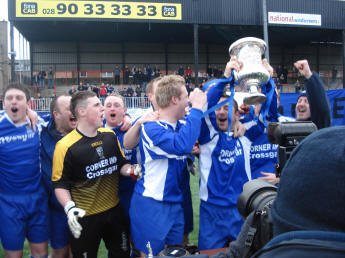
Player-manager Gary Kennedy — the same Gary Kennedy who had scored both goals in the 1996 Youth Cup final, by now a former Cliftonville forward — took the man of the match award for an hour and a half on the left wing, and gave the credit away: “Everyone did their job. Our defenders defended well and the whole team put in a good shift. It wasn’t just the players though, the fans were brilliant too, we couldn’t have done it without their support.” Captain Steven Rogan lifted the cup. Liam Graham, who had come off the bench to drag the club through the semi-final, had now scored the goal that finished the final. The village celebrated that night. That spring the club completed the double, winning Division 1A and returning to the Premier Section: the finest season in Kilmore Rec’s history.
 Add to your home screen